Bodyweight or Resistance Bands for a Small Home Routine?
Compare bodyweight or resistance bands for a small home routine and choose movements that fit your space, feel comfortable, and are easy to set up.
The most common mistake when choosing bodyweight or resistance bands for a small home routine is buying equipment before deciding which movements you want to do. That can leave a band unused or a routine that depends on floor space you do not have. Start with your room and preferred movements, then decide whether a band fills a specific gap.
Bodyweight or resistance bands fit different home setups
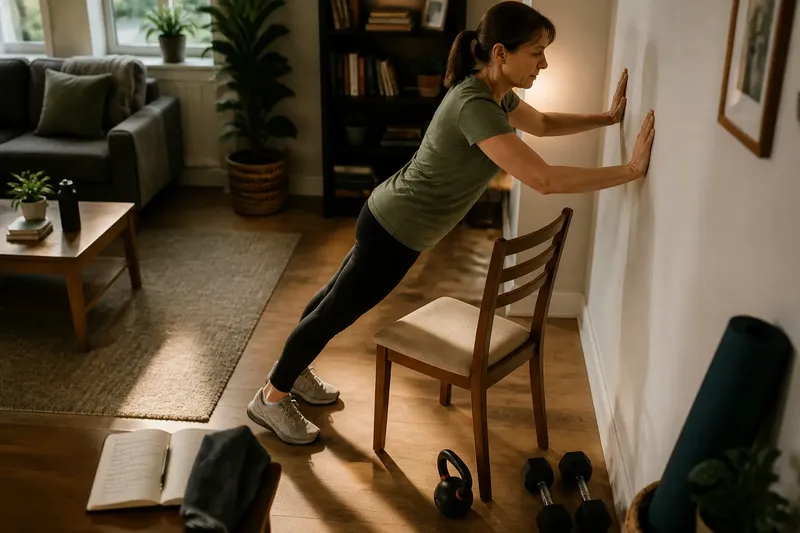
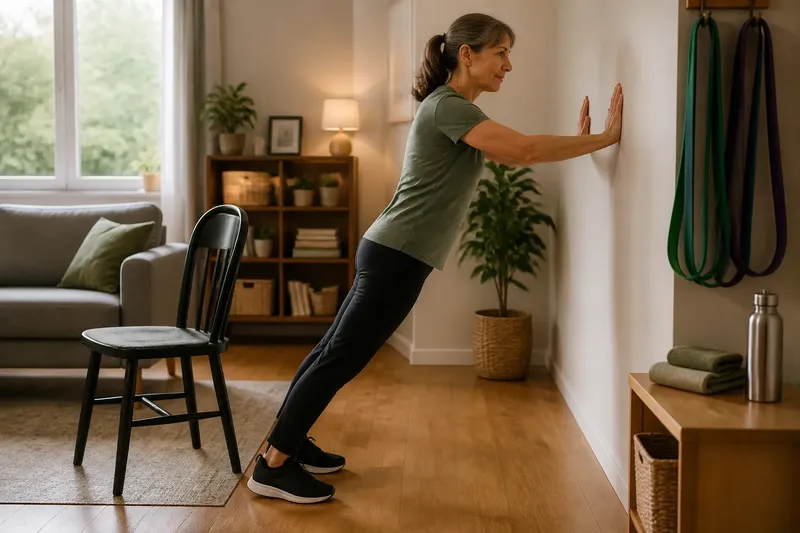
Bodyweight exercise uses your own body as resistance. A chair, wall, or clear patch of floor may be enough for wall push-ups, chair sit-to-stands, and supported balance practice. Some movements still require room to lower yourself to the floor or extend your arms and legs.
Resistance bands add elastic resistance. A loop band can fit in a drawer, while a longer band needs room to stretch without catching on furniture. Bands can make pulling movements easier to include at home, but each exercise still needs a suitable way to hold or position the band.
Stand in the area where you expect to exercise. Reach overhead, extend your arms to the sides, and consider whether you can step back or lower to the floor. Move a chair or coffee table only if doing so is realistic on an ordinary day.
Choose movements that fit the room as it usually is.
Compare the movements each option supports
Bodyweight movements are easy to arrange around pushing, squatting, stepping, and holding positions. A wall push-up trains a pushing pattern without requiring you to get down on the floor, while a chair sit-to-stand gives you a familiar way to practice standing up. Adjusting hand position, range of motion, or support can change how a movement feels.
Bands add a distinct option for pulling against resistance. Depending on the band and how you hold it, you might practice a seated row by placing the band around your feet, or a standing pull-apart by holding it in front of your chest. Bands can also add resistance to some arm and leg movements without bulky equipment.
Neither format automatically covers every movement you might want. A bodyweight routine may need a different choice for pulling, while a band routine depends on grip comfort and a suitable way to position the band. If an exercise feels awkward or unstable, choose another movement rather than forcing the setup.
Build a short menu of movements
Start with a few options instead of trying to assemble a complete program. Consider a lower-body movement, a push, a pull if your setup supports one, and a balance or mobility option. Choose movements you can perform comfortably in your actual space.
- Lower body: If a stable chair is available and standing up feels comfortable, try a bodyweight sit-to-stand; if not, choose a supported movement that suits your ability or ask a qualified professional for guidance.
- Push: If you have a clear wall and the movement feels comfortable, use wall push-ups; if your hands or shoulders feel strained, stop and choose a more suitable option.
- Pull: If you can hold a band securely around your feet for a seated row, use that setup; if the band slips or you cannot position it reliably, leave the movement out rather than improvising an anchor.
- Balance or mobility: If a stable counter is within reach, try supported heel raises; if you feel unsteady, keep both hands supported or choose another movement.
- Band condition: If the band has cracks, tears, or sticky areas, do not use it; if it appears intact, follow its label and manufacturer instructions and keep it clear of sharp edges.
- Storage: If the band can be stored where it stays untangled and easy to inspect, use that spot; if not, choose a safer storage place or begin with bodyweight movements instead.
Make setup simple enough to repeat
Keep the routine near the place where you will use it. For bodyweight movements, clear only the area needed for your selected options and keep a sturdy chair nearby if it is part of the plan. Store bands where they remain visible, untangled, and away from sharp edges.
Say you have a narrow living room, prefer standing movements, and have a stable chair and clear wall. You choose chair sit-to-stands, wall push-ups, and supported heel raises; after checking the space, you find they fit without moving the sofa or getting onto the floor. You also want a pulling movement, but have no band position you can hold securely, so you leave that option out rather than tying the band to furniture.
Begin with the movement that feels most familiar, follow with a different pattern, and finish with an option that leaves you steady and comfortable. Pause as needed. Keep the initial setup simple enough that putting the equipment away does not become a barrier.
What should you consider when choosing bodyweight or resistance bands?
Can bodyweight exercise work in a very small room?
Yes, if you select movements that fit the clear space available. Wall push-ups, chair sit-to-stands, and supported heel raises need less floor area than movements that involve lying down or traveling across the room.
Are resistance bands useful without an anchor?
Some band exercises use your hands or feet to hold the band, such as a pull-apart or seated row. Other movements require an attachment, so do not tie a band to furniture or a door unless its instructions identify that use as suitable.
Which option is easier to carry or store?
Bodyweight exercise requires no equipment, while many bands are compact enough for a drawer or bag. A band still needs appropriate storage and inspection, so choose the option you will handle and put away consistently.
Can I combine bodyweight movements and bands?
Yes. Use bodyweight for movements that suit your space, then add a band where it offers a comfortable resistance option, such as a row or side step. There is no need to make every movement use the same format.
Choose the format that fits your routine
Choose bodyweight movements if you want minimal setup, prefer not to use equipment, or have suitable walls and a chair. Choose bands if you want a compact way to add pulling or adjustable resistance and can position them securely. Combining both is also reasonable.
Before settling on a choice, list a few movements you like, the room conditions they require, and any equipment or support each one needs. If bodyweight options already suit your preferences, start there. If a band fills a specific gap, choose one intended for those movements and follow its instructions. Bodyweight or resistance bands for a small home routine are most useful when the setup fits your space and feels natural to repeat.